




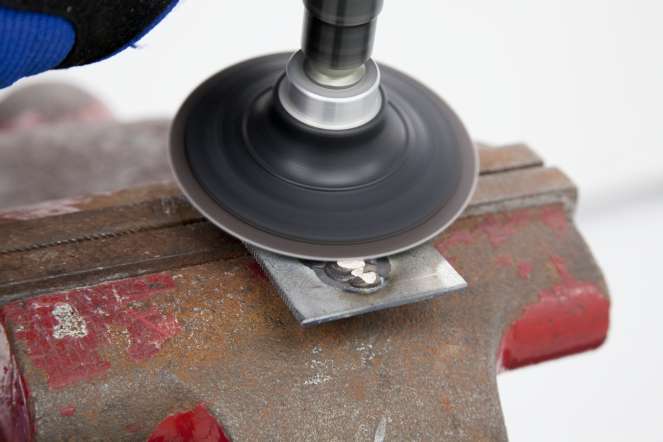
I-CAR Repairability Technical Support Portal
my I-CAR Login
Close
Educational Programs
Academy
Academy for Shops
Academy for Schools
Courses
Course Catalog
Coming Soon
Types of Training
Learning Paths
ADAS Technician
Auto Physical Damage Appraiser
Electrical/Diagnostics Technician
Estimator
Mechanical Technician
Non-Structural Technician
Production Management
Refinish Technician
Structural Technician
Programs
Hands-On Skills Development
In-Shop Knowledge Assessment
Industry Training Alliance
Vehicle and Technology Specific Training
Welding Training & Certification
Registered Apprenticeship
Subscriptions
Value of Training
Network Programs
Insurance
OEM
Technical Information & Services
Repairability Technical Support Portal
Quick Search By Vehicle
OEM Information
Collision Repair News
OEM Calibration Requirements Search
OEM Partial Part Replacement Search
OEM Restraints System Part Replacement Search
OEM Hybrid & Electric Vehicle Disable Search
OEM Glass Replacement
I-CAR Best Practices
Just In Time
Ask I-CAR
ADAS Resources
Electric Vehicle Resources
In-Shop Knowledge Assessment Resources
Welding Resources
Repairers Realm
Collision Reporter
I-CAR Recognition
Platinum
Gold Class
Collision Repair Standards
Insurance Standards
Shop Locator
Industry Segments
Career & Technical Schools
Academy for Schools
PDP-EE - Training For My School
PDP-EE - Welding
PDP-EE - Users List
PDP-EE - Enhanced Package
PDP-EE - Pricing
PDP-EE - Resources and Forms
PDP-EE - Educator Role
PDP-EE - Blog
PDP-EE - my I-CAR
Instructor Support Website
Collision Repair Manager
Collision Repair Technician
Insurance APDA
Insurance Manager
OEM
Suppliers
Supporting Services
About I-CAR
About I-CAR
Vision, Mission & Core Beliefs & Values
Careers
Culture
Governance
Board of Directors
Industry Councils
Industry Reinvestment
Leadership
Membership
Industry Protocol
Sustaining Partners
Volunteers & Instructors
Instructors & Assessors
Volunteers & Committees
Collaborative Solutions
Collision Repair Education Foundation
Awards
MENU
  • Quick Search By Vehicle
  • OEM Information
  • Collision Repair News
  • OEM Calibration Requirements Search
  • OEM Partial Part Replacement Search
  • OEM Restraints System Part Replacement Search
  • OEM Hybrid And Electric Vehicle Disable Search
  • OEM Glass Replacement
  • I-CAR Best Practices
  • Just In Time
  • Ask I-CAR
  • Burnette
  • Babino
  • Butler
  • Team
  • VanHulle
Submit a new collision repair question here!

Follow us on @Ask_ICAR for daily updates.

  1. Home
  2. Collision Repair News
  3. Advanced Joining Methods For Todays Vehicle

Advanced Joining Methods For Todays Vehicle

Posted on: 31 October 2014
Share:
Print Print

This article originally appeared in the November 2014 edition of ABRN.

When friends and family think about the vehicles of yesteryear they often say to me "they don't build them like they used to." I tell them, you have no idea how right you are. Cars today are light years ahead of where they were just a few short years ago. It is no longer vehicles of the future we are discussing, but current vehicles on the road today, and some are being repaired like nothing has changed. With the major changes in vehicle construction, the collision repair industry will need to learn some advanced attachment methods and a new way of thinking. Lets take a look at some advanced attachment methods necessary for repair on vehicles that are on the road today.

MIG Brazing

MIG brazing is used for many different reasons. It can be used to make continuous weld joints on panels where warping, or overheating heat-sensitive materials are a concern. MIG brazing is also used to make slot welds when attaching heat-sensitive materials, and where recommended in vehicle maker repair information. Most of the MIG brazed joints are used to attach a lower strength steel part to a higher strength steel part that is heat sensitive. Another benefit of MIG brazing is that it is softer than steel, allowing it to be more easily shaped and finished. (See Figure 1)

The MIG brazing wire tensile strength is approximately 275–350 MPa but the MIG brazed joint may be stronger than that if done correctly, due to the thickness of the bead on the backside.

The filler metal, which is usually silicon bronze, melts at a lower temperature than the steel base metal. (As a side note, MIG brazing cannot be used on aluminum panels because silicon bronze melts at a higher temperature than aluminum.) The molten filler metal is drawn into the joint by capillary action. In order to have a successful repair when MIG brazing, capillary action is required for a strong joint. Capillary action is the process in which the molten filler metal wicks or spreads out along the backside of the repair joint. The filler metal then bonds to the base metal.
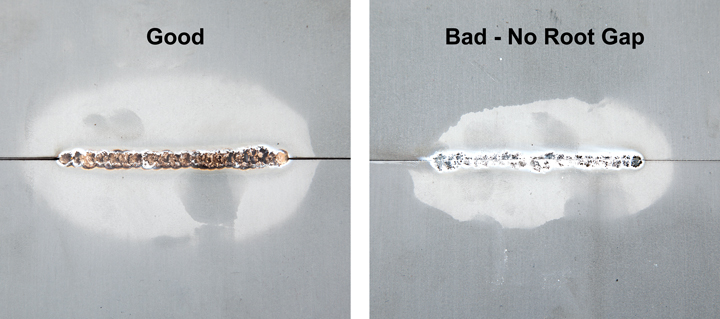
Figure 2 - Without the correct root gap capillary action will not occur.

When you make MIG braze joints, try using a manual stitch to control the heat affect zone (HAZ). This technique works well when using a GMA welder that has silicon bronze wire instead of steel wire. There are some machines that have a preprogrammed setting for MIG brazing. These machines also have adjustments for electrode size, material thickness, and electrode alloy. The goal on an open butt joint is to create a weld bead on the backside that is almost indistinguishable from the front side bead. (See Figure 2)

The natural tendency when someone starts to MIG braze is to turn up the welder in order to get the bead to look the same as when GMA welding. This is both unnecessary and detrimental to the repair joint. It will dramatically increase the HAZ, and still may not provide the proper amount of capillary action.

Another critical part of MIG brazing is to keep the proper root gap to ensure that the brazed joint is strong. If the root gap is too small, there will not be enough capillary action taking place. When the front side is ground down, the weld bead on the backside is the only thing that is providing strength to the repair joint.

Just like with GMA welds, you must visually inspect and destructively test practice welds. When inspecting practice welds, look for tearout around the brazed joint the same way as when testing GMA welds. Another destructive test that should be done is the grind destructive test. To do the test, make a weld and grind the front side level with the surface. Then, destructively test the weld. This test will verify that the joint has sufficient capillary action.

Aluminum Welding
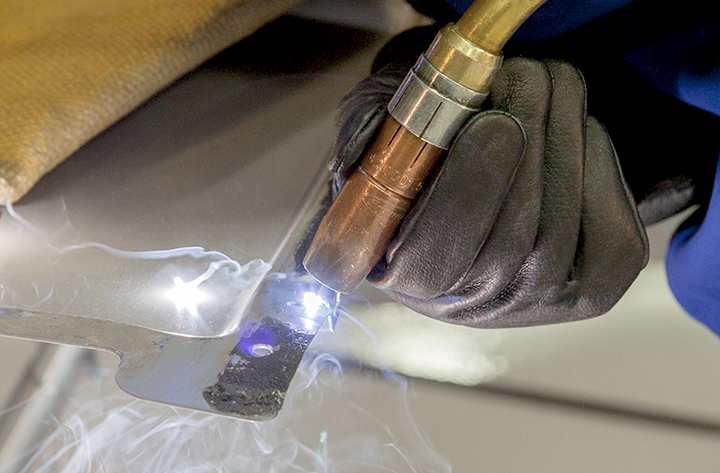
Ford Filtering buttonFigure 3 - This pulse welder is creating a quality weld bead.

Next let’s take a look at aluminum welding. For some of the luxury vehicle repair facilities, welding aluminum is nothing new, but for many it is virtually an unknown. First thing that is needed is the right equipment. Most of the vehicle makers require a welder that is capable of welding in the pulse mode. (Check with each vehicle maker requirements for full details.) (See Figure 3)

The next thing that will be needed is training and practice. Aluminum welding is far less forgiving than traditional steel welding. When aluminum welding, surface preparation is absolutely critical to a successful weld. Aluminum, once exposed to air, almost instantly forms an aluminum oxide layer. This non-conductive aluminum oxide layer is extremely hard, has a higher melting temperature than aluminum, and will cause extremely bad welds due to porosity. (See Figure 4)
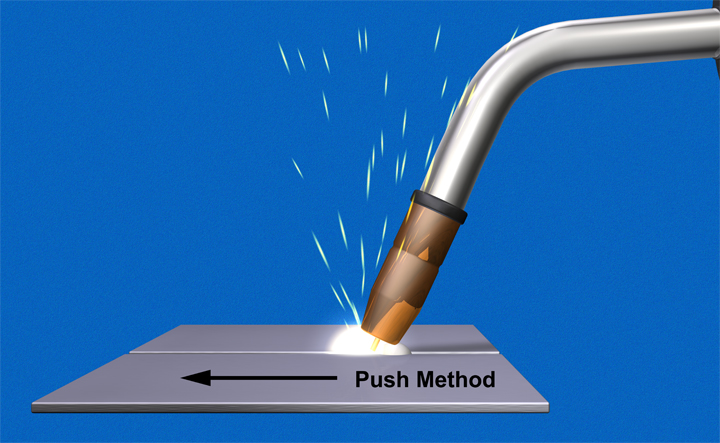
Ford Filtering buttonFigure 4 - When aluminum welding, the push technique must be used to create a strong weld.

If there are any deficiencies in welding technique, aluminum welding will show it in the form of a bad weld. This is where training and practice are going to be key. With steel GMA welding, you can push or pull the weld puddle, and have some success with either method. But with aluminum you have to push the weld puddle. This will preheat the panel ahead of the weld, which will keep a stable arc and allow the shielding gas to protect the welding zone from outside contaminants.

Rivet Bonding

The final attachment method we will look at is rivet bonding, with the main focus being self-piercing rivet (SPR) bonding. This again is not new to those that repair steel and aluminum luxury vehicles. But for the rest of the industry, it is a new concept. The good news is with some new pieces of equipment, and some training, you will have what you need. With rivet bonding, there are some similarities to squeeze-type resistance spot weld (STRSW) bonding that will be familiar.
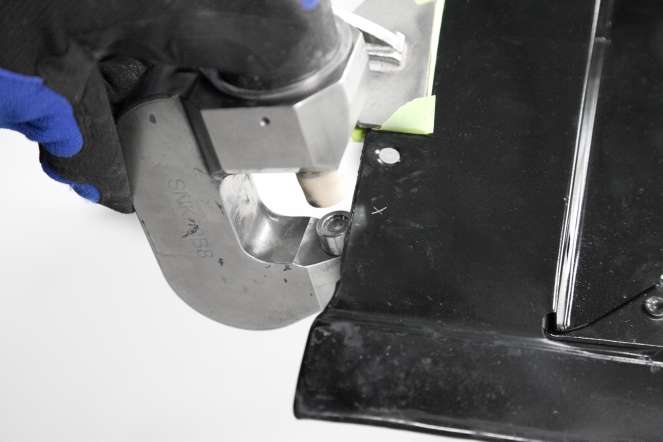
Ford Filtering buttonFigure 5 - This SPR gun is installing replacement rivets.

The similarities are that panel fit up and flange preparation must be a top priority for a successful repair. The jaws of a spot welder will not correct panel misalignment, neither will an SPR gun. If the panels do not align, it will cause a poor quality repair. Also, the flange preparation is critical, so the adhesive can properly attach the panels. And as always, do not forget to prepare the adhesive cartridge following product maker instructions to ensure proper curing of the adhesive. (See Figure 5)

Now, lets look at the required equipment; the main tool that will be needed is a SPR gun. The types of vehicles you are repairing will help determine which gun is needed, the types (blind rivets are often used in conjunction with SPRs) and size of SPRs, and any accessories that are needed for the SPR gun. (Look at the vehicle maker repair information for more details) On the jaws of the SPR gun, there are several different die sets that will be needed, some are used to extract previously installed SPRs, and some to install new SPRs. (See Figure 6)
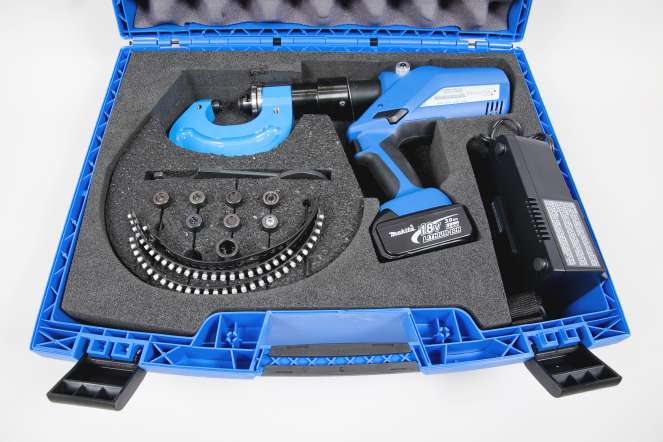
Ford Filtering buttonFigure 6 - This is one of many SPR gun kits that are available.

The final piece of this puzzle is selecting the correct size and type of rivet. The length of the SPR or blind rivet must be matched to the panel thicknesses that are being joined. An SPR that is too long will not form correctly and could leave a hole in the backside of the panel, while one that is too short will not form correctly creating a weak spot in the repair and could cause a repair failure. The best way to determine which SPR is required is to follow vehicle maker repair procedures.

Conclusion

Repairs on today’s complex vehicles are not the repairs of yesteryear. The vast combinations of materials and joining methods from the vehicle maker require the collision repair industry to update their tools, equipment, techniques, training, and thought process. If the industry does not adapt to this new world, complete and safe repairs will become part of yesteryear as well.

Additional I-CAR Collision Repair News you may find helpful:

  • Welding And MIG Brazing Hotspot

Related I-CAR Courses

Course Aluminum GMA Welding Theory

Course Introduction to MIG Brazing

Course Introduction to Rivet Bonding

Course Welding Training and Certification

  • Most Popular
  • Most Recent
  • Archive
  • Toyota/Lexus/Scion Position Statement: Pre- and Post-Repair System Scanning Thursday, 28 July 2016

    As the industry continues to ask if pre- and post-repair system scanning is necessary, Toyota/Lexus/Scion provides their answer.

  • Pre- and Post-Repair System Scanning Statements Wednesday, 9 January 2019

    Are you wondering if a particular OEM or organization has a published statement on pre-repair and post-repair scanning? We have compiled a list of most of the statements on the subject, so you can...

  • ADAS, Calibration, And Scanning Article Hotspot Monday, 14 January 2019

    Since advanced driver assistance systems (ADAS), scanning, and calibration first started becoming relevant, members of the collision repair industry have required as much knowledge as possible on...

  • Honda/Acura Position Statement: Pre- and Post-Repair System Scanning - UPDATE Wednesday, 22 May 2019

    Honda /Acura has updated their position statement on pre- and post-repair scanning to give more clarification on what is expected for scanning.

  • BMW Position Statement: Pre- and Post-Repair System Scanning - UPDATE Friday, 10 April 2020

    BMW has released a position statement related to pre- and post-repair system scanning. The statement applies to All vehicles equipped with on board diagnostics II (OBD II).

  • Quickly Identifying Outer Quarter Panels w/Rolled Hem Flanges Monday, 5 March 2018

    The I-CAR best practice article, Recycled Outer Quarter Panels w/Rolled Hem Flanges has gotten a lot of interest from the collision repair industry. It’s important to know which vehicles are...

  • General Motors Position Statement: Pre- and Post-Repair System Scanning Friday, 21 October 2016

    As the industry continues to ask, are pre- and post-repair scans necessary, General Motors provides their answer.

  • Restraints Wiring Repairs Monday, 23 May 2016

    Over the past few months, we've been sharing OEM position statements on restraints wiring repairs. Now we're bringing them all together in one place for easy reference.

  • FCA/Stellantis Position Statement: Pre- and Post-Repair System Scanning Thursday, 9 June 2016

    FCA/Stellantis has released a position statement related to pre- and post-repair system scanning.

  • Nissan/INFINITI Position Statement: Pre- and Post-Repair System Scanning - UPDATE Monday, 14 January 2019

    Nissan/INFINITI updated their position statement on pre- and post-repair scanning. The revised position statement touches on more subjects and gives additional information on the subject.

  • Repairer Driven News: Rivian Updates Door Handle Procedure Sunday, 4 February 2035

    Repairer Driven News (RDN) released an article featuring an updated Rivian procedure.

  • Body Construction And Material Repair Guidelines: Toyota/Lexus - UPDATE Tuesday, 30 September 2025

    What is the MPa of the front lower rail? What is the outer uniside made of: steel, aluminum, or composite? Can heat be used to straighten or is it cold straightening only? What are the repair...

  • I-CAR Repairers Realm: Ford Explorer Rear Rail Sectioning - Now Available Friday, 26 September 2025

    I-CAR had a discussion on 2020-2025 Ford Explorer rear rail sectioning.

  • Digital Key Considerations: FCA/Stellantis Wednesday, 24 September 2025

    The intermingling of technology and automobiles continues, with digital key offerings from most vehicle makers. Digital keys utilize smartphone technology to expand vehicle access and owner...

  • App-Based Connected Services Considerations: FCA/Stellantis Wednesday, 24 September 2025

    Have you had an experience where the vehicle notified the owner that it was being moved while it was in your repair facility? App-based connected services are available from many vehicle makers and...

  • Backup Battery And Low-Voltage Disconnect: Mazda Friday, 19 September 2025

    When an accident happens, how will you call for help? Maybe the telematics system, equipped with a backup battery, could automatically do this, even if the main power is cut off. What are the repair...

  • Body Repair Manual Symbols: Kia Wednesday, 17 September 2025

    While looking at repair procedures in a body repair manual (BRM) you may notice that symbols are used to indicate specific operations or parts to be used during the repair process. Most BRMs provide a...

  • I-CAR Just In Time: Mirror Matching Parts Monday, 15 September 2025

    Sometimes seeing is understanding, that’s why I-CAR's technical team created the Just in Time video series to guide you through a variety of collision repair topics from ADAS and EVs to repair tips...

  • I-CAR Just In Time: Blend Panel Prep And Toner Replacement Wednesday, 10 September 2025

    Sometimes seeing is understanding, that’s why I-CAR's technical team created the Just in Time video series to guide you through a variety of collision repair topics from ADAS and EVs to repair tips...

  • GM Repair Insights: Summer 2025 Monday, 8 September 2025

    The summer edition of General Motors (GM) Repair Insights is now available.

  • February 2023
    • 2007 Chevrolet Silverado 1500 (New)
    • 2007 Chevrolet Silverado 1500 Classic
    • 2007 Chevrolet Silverado 1500 HD Classic
    • 2007 Chevrolet Silverado 2500 HD
    • 2007 Chevrolet Silverado 2500 HD Classic
    • 2007 Chevrolet Silverado 3500 Classic
    • 2007 Chevrolet Silverado 3500 HD
  • January 2019
    • 2007 Chevrolet Silverado 1500 Classic Parallel Hybrid Truck (PHT)
  • May 2015
    • 2007 Audi A3
    • 2007 Audi A4
    • 2007 Audi A4 Cabriolet
    • 2007 Audi A6
    • 2007 Audi A8
    • 2007 Audi Q7
    • 2007 Audi TT
  • December 2014
    • 2007 Chevrolet Silverado 1500 Classic Parallel Hybrid Truck (PHT)
  • September 2014
    • 2007 Acura CSX
    • 2007 Acura MDX
    • 2007 Acura RDX
    • 2007 Acura RL
    • 2007 Acura TL
    • 2007 Acura TSX
    • 2007 Audi A3
    • 2007 Audi A4/S4 Convertible
    • 2007 Audi A4/S4 Sedan/Wagon
    • 2007 Audi A6 Sedan
    • 2007 Audi A6 Wagon
    • 2007 Audi A8/A8L 4.2L V8
    • 2007 Audi A8L 6.0L W12/ S8
    • 2007 Audi Q7
    • 2007 Audi RS4 Sedan
    • 2007 Audi S6 Sedan
    • 2007 BMW 3-Series Convertible
    • 2007 BMW 3-Series Coupe
    • 2007 BMW 3-Series Sedan
    • 2007 BMW 3-Series Wagon
    • 2007 BMW 5-Series Sedan
    • 2007 BMW 5-Series Wagon
    • 2007 BMW 6 Series Convertible
    • 2007 BMW 6 Series Coupe
    • 2007 BMW 7 Series
    • 2007 BMW X3
    • 2007 BMW X5 3.0i/3.0is/4.8i
    • 2007 BMW Z4
    • 2007 Buick LaCrosse (USA)/ Allure (Canada)
    • 2007 Buick Lucerne
    • 2007 Buick Rainier
    • 2007 Buick Rendezvous
    • 2007 Buick Terraza
    • 2007 Cadillac CTS
    • 2007 Cadillac DTS
    • 2007 Cadillac Escalade
    • 2007 Cadillac Escalade EXT
    • 2007 Cadillac SRX
    • 2007 Cadillac STS
    • 2007 Cadillac XLR
    • 2007 Chevrolet Avalanche
    • 2007 Chevrolet Aveo Hatchback
    • 2007 Chevrolet Aveo Sedan
    • 2007 Chevrolet Cobalt
    • 2007 Chevrolet Colorado Ext/Crew Cab
    • 2007 Chevrolet Colorado Std Cab
    • 2007 Chevrolet Corvette
    • 2007 Chevrolet Equinox
    • 2007 Chevrolet Express
    • 2007 Chevrolet Express Cutaway
    • 2007 Chevrolet HHR
    • 2007 Chevrolet Impala/Impala Limited
    • 2007 Chevrolet Malibu Maxx
    • 2007 Chevrolet Malibu\Classic
    • 2007 Chevrolet Monte Carlo
    • 2007 Chevrolet Silverado 1500 Crew Cab
    • 2007 Chevrolet Silverado 1500 Std/Ext Cab
    • 2007 Chevrolet Silverado 2500HD/3500 Crew Cab
    • 2007 Chevrolet Silverado 2500HD/3500 Crew Cab
    • 2007 Chevrolet Silverado 2500HD/3500 Std/Ext Cab
    • 2007 Chevrolet Silverado 2500HD/3500 Std/Ext Cab
    • 2007 Chevrolet Silverado 3500 Std/Ext Cab&Chassis
    • 2007 Chevrolet Silverado Crew Cab
    • 2007 Chevrolet Silverado Hybrid
    • 2007 Chevrolet Silverado Std/Club Cab
    • 2007 Chevrolet Suburban
    • 2007 Chevrolet Tahoe
    • 2007 Chevrolet Trailblazer
    • 2007 Chevrolet Uplander
    • 2007 Chrysler 300/300C
    • 2007 Chrysler Aspen
    • 2007 Chrysler Crossfire
    • 2007 Chrysler Pacifica
    • 2007 Chrysler PT Cruiser Convertible
    • 2007 Chrysler PT Cruiser Hatchback
    • 2007 Chrysler Sebring/200 Sedan
    • 2007 Chrysler Town & Country
    • 2007 Dodge Caliber
    • 2007 Dodge Caravan
  • June 2014
    • 2007 Acura MDX
    • 2007 Acura RDX
    • 2007 Acura RL
    • 2007 Acura TL
    • 2007 Acura TSX
    • 2007 BMW 3 Series
    • 2007 BMW 5 Series
    • 2007 BMW 6 Series
    • 2007 BMW 7 Series
    • 2007 BMW X3
    • 2007 BMW X5
    • 2007 BMW Z4
    • 2007 Buick LaCrosse
    • 2007 Buick Lucerne
    • 2007 Buick Rainier
    • 2007 Buick Rendezvous
    • 2007 Buick Terraza
    • 2007 Buick Terraza Ext.
    • 2007 Cadillac CTS
    • 2007 Cadillac DTS
    • 2007 Cadillac Escalade
    • 2007 Cadillac Escalade ESV
    • 2007 Cadillac Escalade EXT
    • 2007 Cadillac SRX
    • 2007 Cadillac STS
    • 2007 Cadillac XLR
    • 2007 Chevrolet Avalanche
    • 2007 Chevrolet Aveo
    • 2007 Chevrolet Cobalt Coupe
    • 2007 Chevrolet Cobalt Sedan
    • 2007 Chevrolet Colorado
    • 2007 Chevrolet Corvette Convertible
    • 2007 Chevrolet Corvette Coupe
    • 2007 Chevrolet Corvette Z06
    • 2007 Chevrolet Equinox
    • 2007 Chevrolet Express
    • 2007 Chevrolet HHR
    • 2007 Chevrolet Impala
    • 2007 Chevrolet Malibu
    • 2007 Chevrolet Malibu Maxx
    • 2007 Chevrolet Monte Carlo
    • 2007 Chevrolet Suburban
    • 2007 Chevrolet Tahoe
    • 2007 Chevrolet TrailBlazer
    • 2007 Chevrolet Uplander
    • 2007 Chevrolet Uplander Ext.
    • 2007 Chrysler 300
    • 2007 Chrysler Aspen
    • 2007 Chrysler Crossfire
    • 2007 Chrysler Pacifica
    • 2007 Chrysler PT Cruiser
    • 2007 Chrysler Sebring
    • 2007 Chrysler Town & Country
    • 2007 Chrysler Voyager
    • 2007 Dodge Caliber

Top Ten Vehicle Specific Questions

  • Hyundai Does Hyundai have a sectioning procedure available?
  • 2014 Jeep Cherokee Is there a procedure available for resetting the active headrestt?
  • Kia Does Kia have a sectioning procedure available?
  • Chevrolet Does Chevrolet have a warning against sectioning when there is no procedure?
  • BMW Can I-CAR send me BMW repair procedures?
  • Hyundai Does Hyundai have part replacement procedures available?
  • Honda What does Honda say about repairing damaged airbag system wiring harnesses?
  • Mercedes-Benz Can I-CAR send me Mercedes-Benz repair procedures?
  • Honda What does Honda say about straightening front lower rails?
  • Subaru Do you have to replace a front passenger airbag on a Subaru even if the airbag did not deploy? The repair information seems to indicate that it should.

Top Ten I-CAR Specific Questions

  • What does I-CAR say about using a recycled quarter panel assembly that includes the inner, outer, and reinforcements?
  • What does I-CAR say about repair tolerances?
  • What does I-CAR say about straightening a kink?
  • What does I-CAR say about replacing suspension parts in pairs?
  • What does I-CAR say about the decision to use recycled parts?
  • What does I-CAR say about repairing damaged door intrusion beams?
  • Can I-CAR General Sectioning Guidelines be used?
  • What does I-CAR say about repairing damaged bumper reinforcements?
  • What does I-CAR say about using recycled airbags?
  • What does I-CAR say about disconnecting the battery prior to welding on the vehicle, specifically in regards to airbags?
I-CAR Knowledge and Skills Protocol Collision Reporter Network Programs Industry Training Alliance BodyShopology
  • About RTS
  • Contact Us
  • Related Industry Links
  • Newsletter
  • Help/FAQ
  • Cancellation Policy
  • Ad and Cookie Policy
  • Updated Privacy Policy
  • Updated Terms and Conditions
Facebook LinkedIn Instagram Twitter YouTube Apple Podcasts
I-CAR Tech Center (RTS)
N127 South Park Drive
Appleton, WI 54914
Copyright © I-CAR. All rights reserved. WebCitz
Tweets by @Ask_ICAR