Close
|
|


|
|
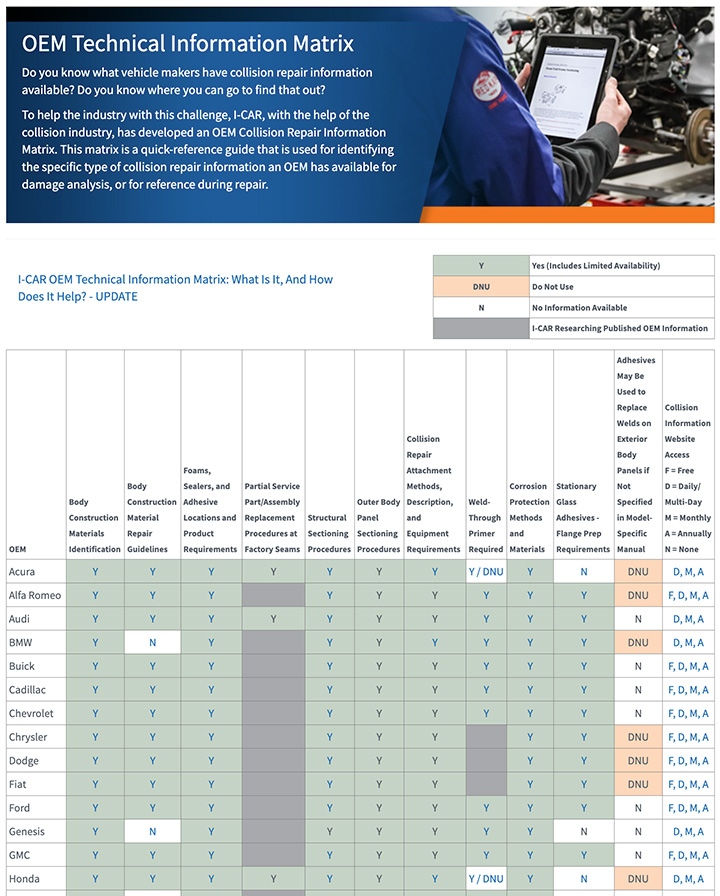
Let's continue our breakdown of the columns in the OEM Technical Information Matrix. The fifth and sixth columns call out the sectioning of two different areas. The fifth column is Structural Sectioning Procedures including front or rear rails. The sixth column is Outer Body Panel Sectioning Procedures including outer unisides and quarter panels.

When it comes to repair information, vehicle makers use a wide variety of terminology for replacement parts. All of the different names can be confusing, especially when repairing a variety of vehicle makes and models.
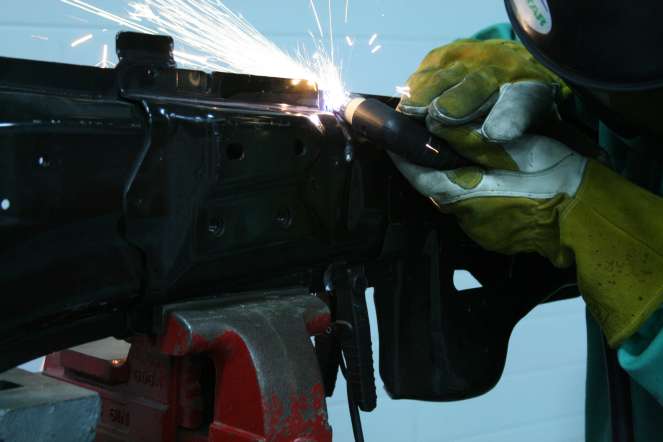
With so much boron-allowed steel, does a plasma arc cutter even belong in a modern collision repair facility? The simple answer is yes but in limited areas, and it should be used at the lowest setting that can still effectively cut the material.
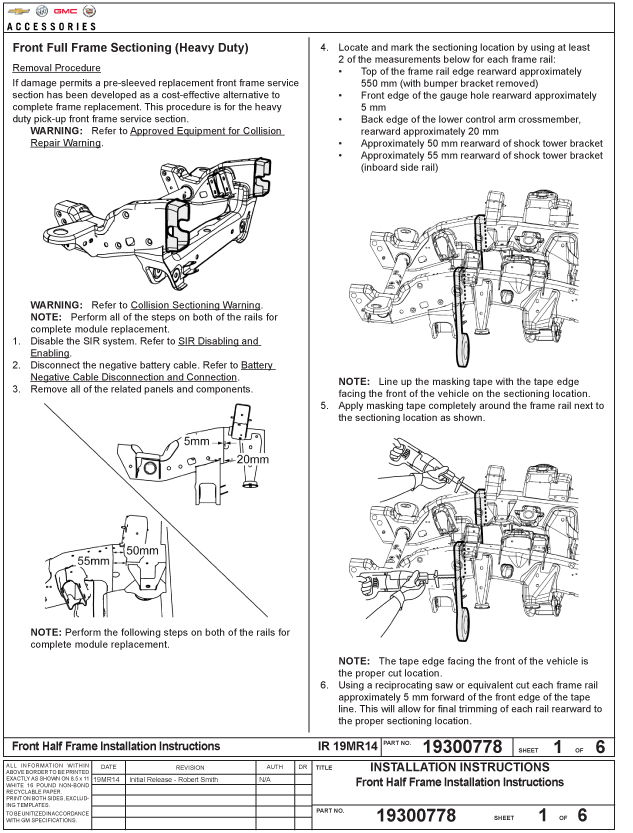
General Motors released a new full-frame sectioning kit for the front frame rails on 2011 - current 2500/3500 GMC Sierra and 2500/3500 Chevrolet Silverado. A similar kit has been available for the light-duty pickups, but this new part kit is specific to the heavy-duty pickups.

The OEM Technical Information Matrix has been updated to include Volvo information. The corresponding, Collision Repair Information Availability chart has also been updated on the Volvo-specific OEM Information page.
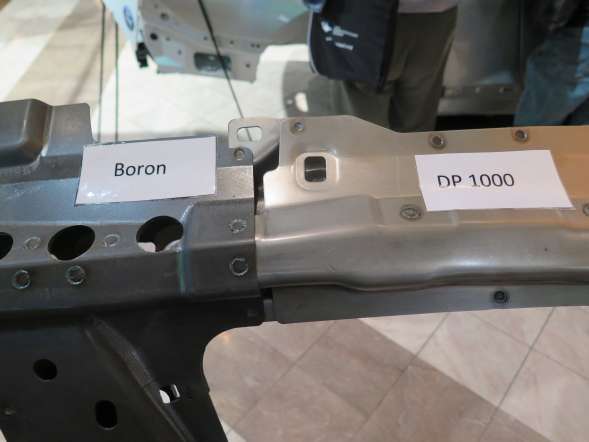
Earlier this year, at Great Designs in Steel 2014, Ford shared details about the construction of the 2015 Ford Mustang. The 2015 Mustang will use a variety of different steels, from mild to ultra-high-strength (UHSS), throughout the vehicle structure.

More great things have been added with the launch of the new website. Each OEM, or vehicle maker, now has their own OEM Information page. You are able to access an OEM-specific page by clicking on their emblem. There are a variety of types of information available for each OEM. The icons will link you the following OEM-specific types of information:
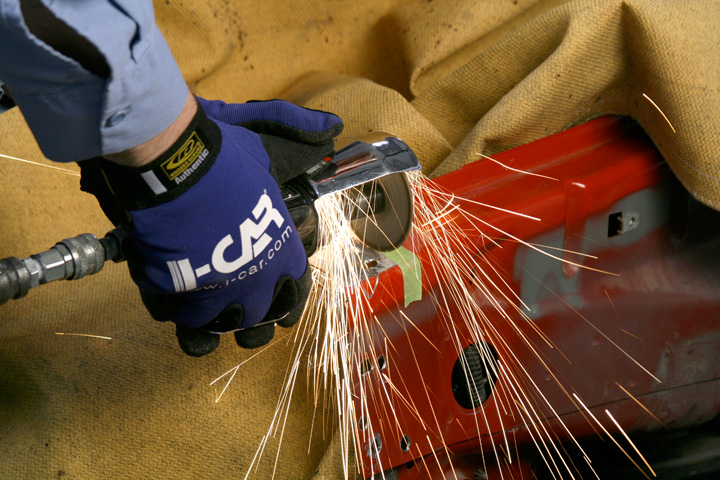
When attempting to cut boron-alloyed steel using a cutoff wheel, you may question whether you will even be able to cut the part or just be using up discs?
The fourth column in the OEM Technical Information Matrix: Partial Service Part/Assembly Replacement Procedures at Factory Seams, can get a little tricky without further clarification. For the most part, this is a column that I-CAR is still researching published OEM information to get the answers to. The question is: Does the vehicle maker have procedures for replacing a partial service part or assembly at factory seams?
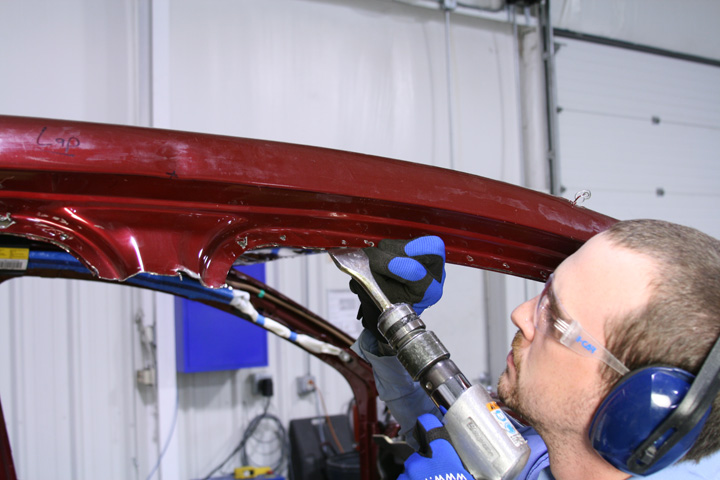
Ever hear how an air chisel is for mechanics and nothing more than a crude tool for cutting a hole in a part to gain access? Would you ever use it to remove an exterior body panel from a reinforcement?
When it comes to repair information, vehicle makers use a wide variety of terminology for replacement parts. All of the different names can be confusing, especially when repairing a variety of vehicle makes and models.
Have you ever printed a repair procedure only to find out that later on when you went to reference the information, it wasn't there? If so, most likely you discovered it the day after your short-term subscription expired, or it was for a procedure that was particularly difficult to find in the manual. You may have wondered if you did something wrong or if the procedure even exists.
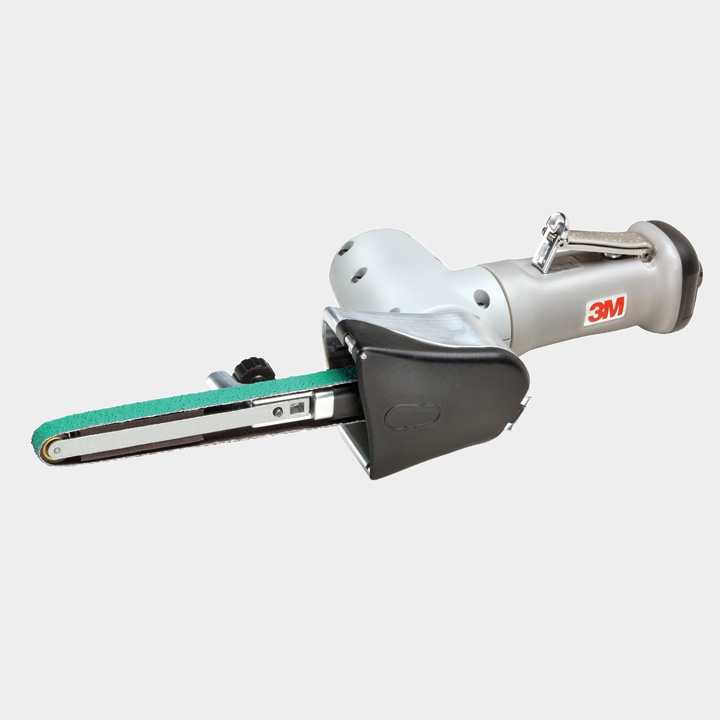
How do you remove spot welds on something that is harder than a drill bit? Well you could always use a file belt sander.
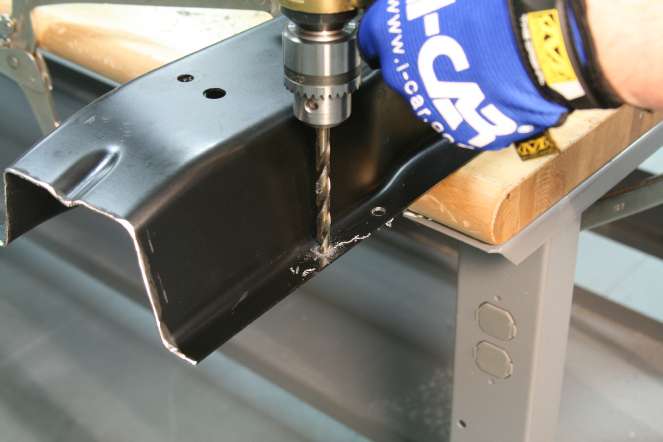
To drill or not to drill, that is the question or more appropriately "how do I drill boron-alloyed steel so I don't keep going through drill bits?" Many of us have asked ourselves this when working with boron-alloyed steel or ultra-high-strength steel (UHSS).
There are an increasing number of materials being used in vehicles to help make them safer and create a quieter passenger compartment. Foam fillers, seam sealers, and adhesives often help accomplish this. It is impossible to see the location of all of these materials simply by looking at the outside of the vehicle. Not to mention, when you look at a product maker's catalog, there are many different options for replacement materials. So the question is: where do I find this information to repair the vehicle properly?