Close
|
|


|
|

Why MIG Brazing?
It is widely known that GMA welded; fully galvanized steel will lose some of its properties, including corrosion protection, due to the heat created during welding. OEMs are starting to counter this problem by using MIG brazing along with "stitch" and "skip" methods to control the heat. However, MIG brazing should only be done in areas specified by an OEM procedure. With MIG brazing, the lower heat input burns away a minimal amount of the zinc corrosion protection (galvanizing) adjacent to the weld (see Figure 1).
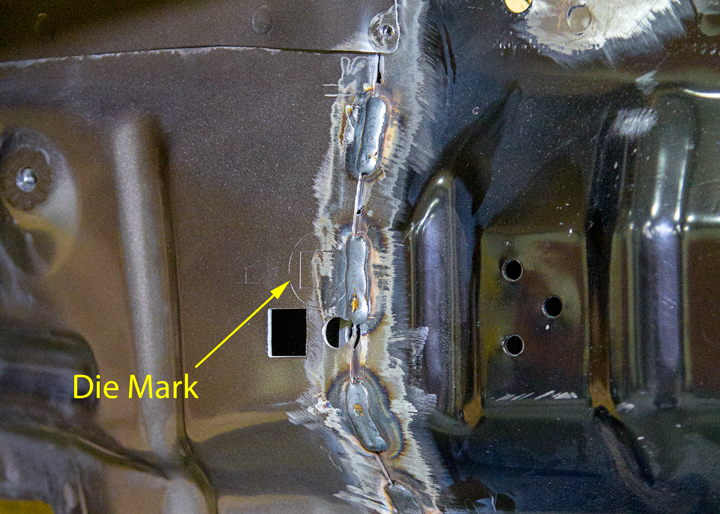
It's just a recommendation, if they wanted me to follow it, they would call it a requirement, right? Wrong!
Knowing whether or not a part is made of boron-alloyed steel is important for repairs and replacement. OEM repair information is the best source to identify if a part is UHSS.decisions. The location of the part can be used to determine if the part is likely to be an ultra-high-strength steel (UHSS) part. However, part location is not definitive, the part could be boron-alloyed steel or it could be a part that is below 600MPa steel. The location will help to prompt further research into straightening, sectioning, or replacing at factory seams. Steel identification may also help determine removal and attachment methods.
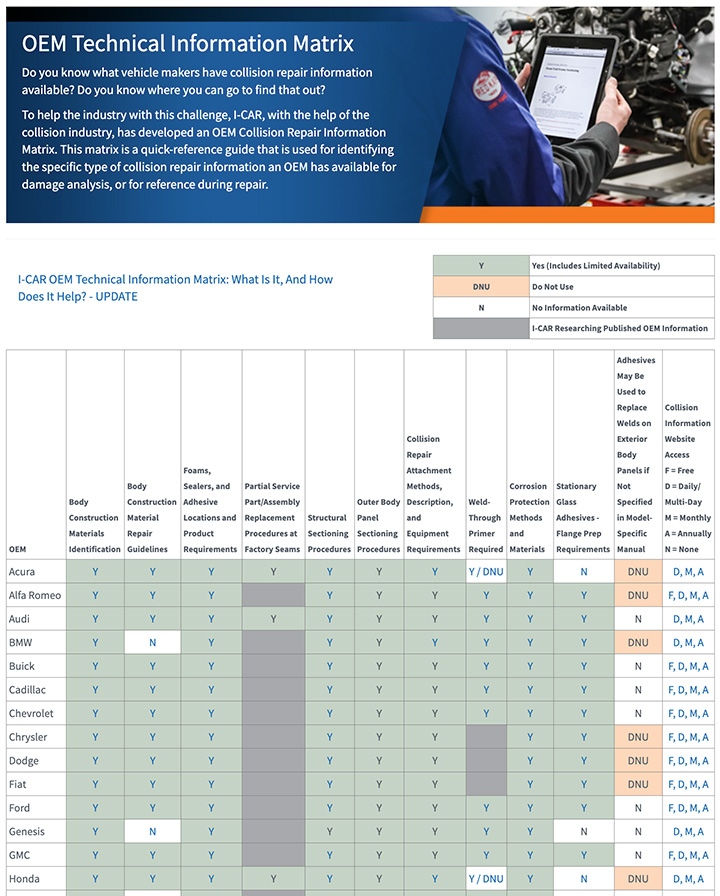
With the use of advanced materials constantly increasing, it is hard to know where to start. I-CAR has addressed the first step to this common issue with the first two columns in the OEM Technical Information Matrix: the Body Construction Materials Identification column and the Body Construction Material Repair Guidelines column. Let's take a brief look at each one.
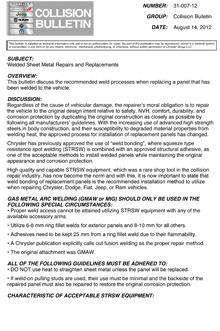
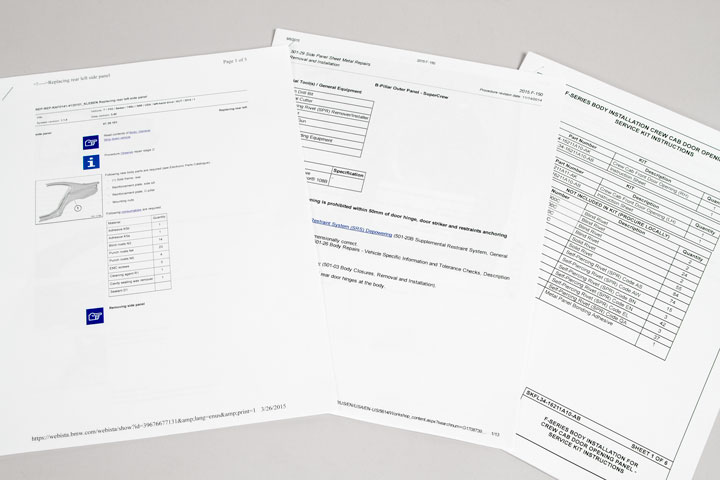
So you've got a Chrysler sitting in your repair facility and a service part, but no installation procedure. What do you do? On any other steel vehicle, you would duplicate the original attachment method and plug welds are ok, but not a Chrysler.
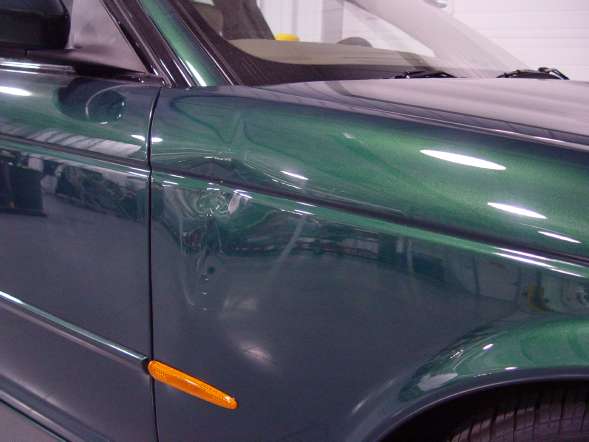
Repairing mild steel body panels with collision damage is nothing new. Using hammers, dollies, and picks when access to the backside is obtainable is a very common practice for straightening. With areas of limited access to the backside, using a weld-on dent puller for straightening is also quite common. So why does this change when dealing with an aluminum exterior panel?
In your recent pursuit of late-model Ford sectioning information, you've scanned past the term "lap-joint backer plate" in their body repair manuals. Wait a minute, pause, rewind, what is a lap-joint backer plate and how do you make that?
"NOTE: The following steps provide a general guideline for replacement of body structure components. Refer to exploded views for specific component and assembly information." Additionally Ford says "Where possible, create a backer piece using a portion of the old panel. This will create a stronger joint."
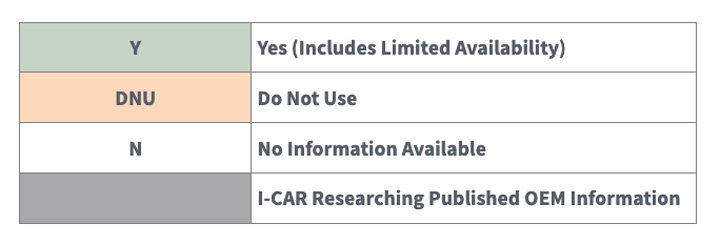
When going through a collision repair manual, it is important to know what the symbols and colors mean. The same holds true when using the I-CAR developed OEM Collision Repair Information Matrix. Let's take a closer look at the key that identifies the status of each vehicle maker on the I-CAR developed OEM Technical Information Matrix.
When it comes to repair information, vehicle makers use a wide variety of terminology for replacement parts. All of the different names can be confusing, especially when repairing a variety of vehicle makes and models.
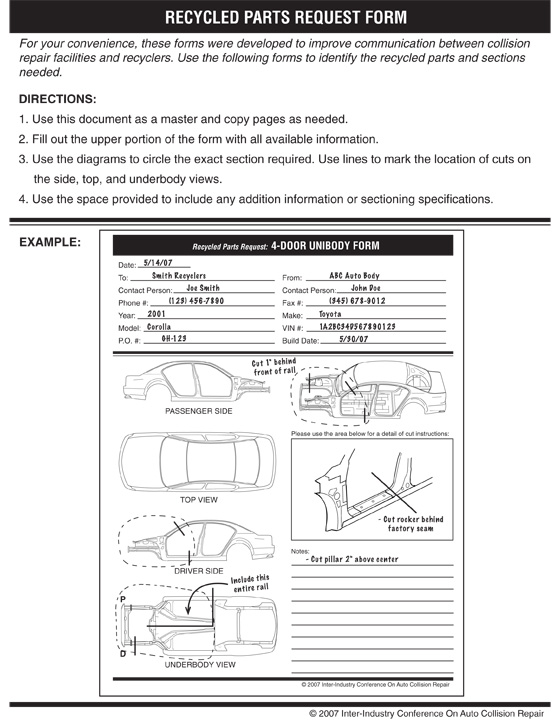
Have you misplaced your copy of the I-CAR Recycled Parts Request Form? Let us help you.
Here is a link to download your copy of the I-CAR Recycled Parts Request Form.
When it comes to repair information, vehicle makers use a wide variety of terminology for replacement parts. All of the different names can be confusing, especially when repairing a variety of vehicle makes and models.
While doing research to update the OEM Partial Part Replacement Search we found there were several model years from Subaru that did not have a collision repair manual.
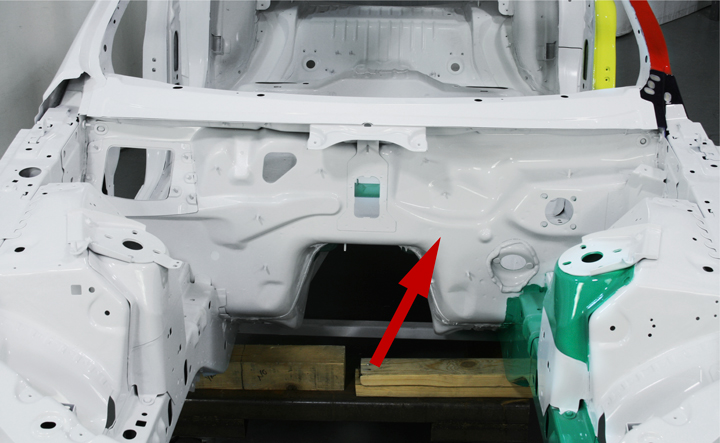
A cowl may also be referred to as a firewall or dash panel. It is common for cowls to be multi-piece parts. Typically, if the part is sold by the vehicle maker, it can be replaced as supplied. A cowl may have one or multiple layers of sheet metal. When this type of part is replaced, make sure to maintain the same panel layering as the original part.