Close
|
|


|
|
Are you looking for OEM emergency response guides (ERGs)? The Repairability Technical Support (RTS) team has located these guides and either houses them on the RTS website, provides links to webpages that house them, or provides articles with instructions on how to locate them.
These guides provide information about the vehicle that is useful to emergency response personnel. You may find ERGs available for many types of vehicles, but most OEMs focus on how to handle a high-voltage (HV) vehicle that has been involved in a collision.
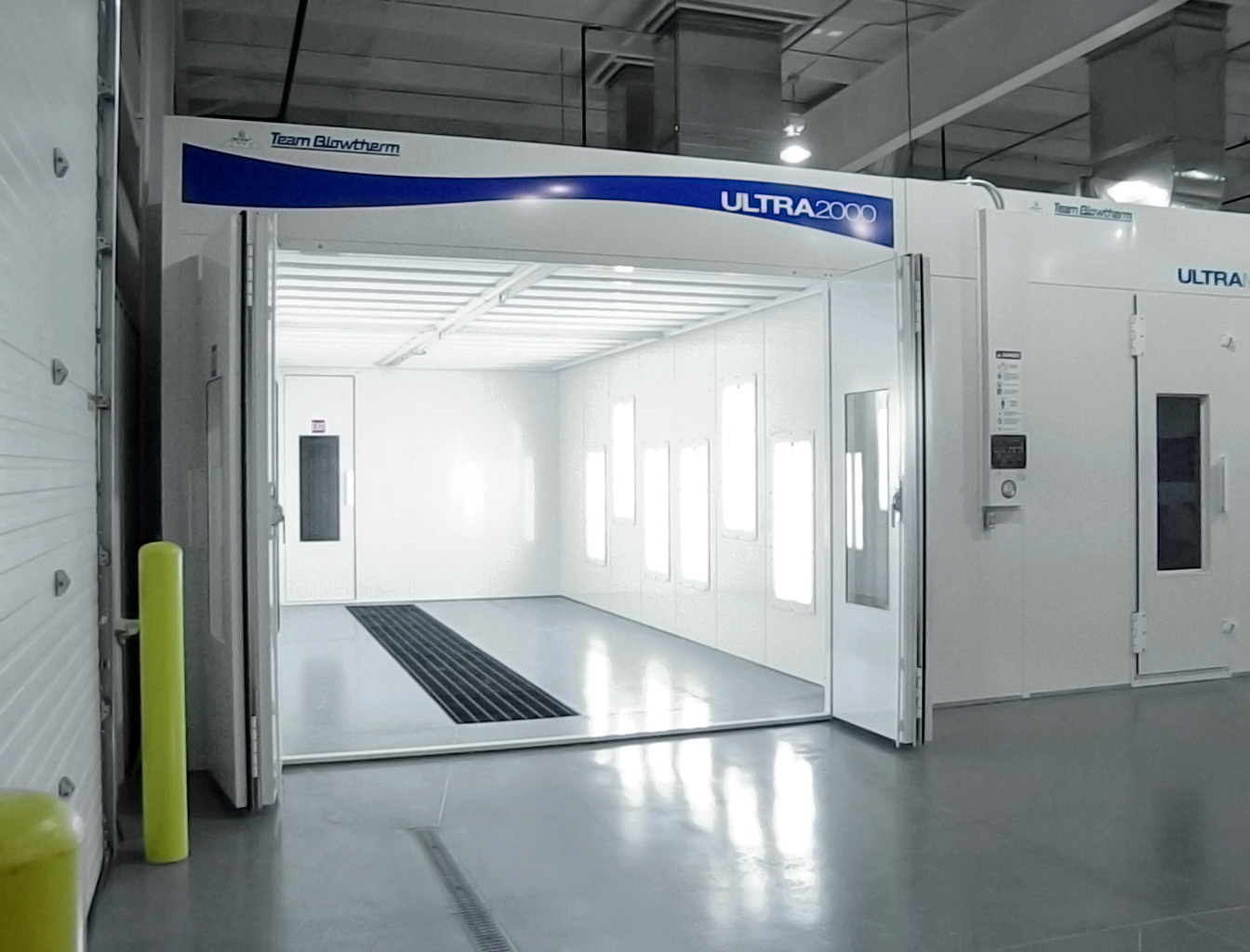
Sometimes, going back to the basics can make the difference between a quality repair and a failed repair. When repairing and refinishing electric vehicles (EVs), unintentional damage to the battery can be avoided by taking the proper steps including researching the paint maker technical data sheets (TDS) for optimal clearcoat baking requirements and vehicle maker service information for temperature and time restrictions.

I-CAR had a discussion on the importance of battery enclosure testing.

Repairer Driven News (RDN) released an article highlighting the Honda CR-V Hybrid that is in production and their plans for hydrogen use.
Repairer Driven News (RDN) released an article highlighting Nissan ProPILOT Assist on many 2023 models.
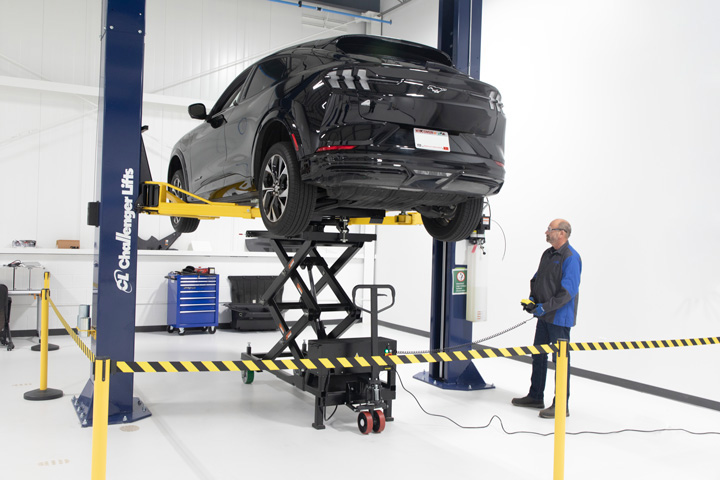
Vehicles with high-voltage (HV) batteries (hybrid and electric vehicles) may have different considerations when it comes to lifting or jacking. Typically, a collision repair facility uses floor jacks, jack stands, and lifts to safely gain access to the underside of vehicles. Let’s take a look at some of these considerations.
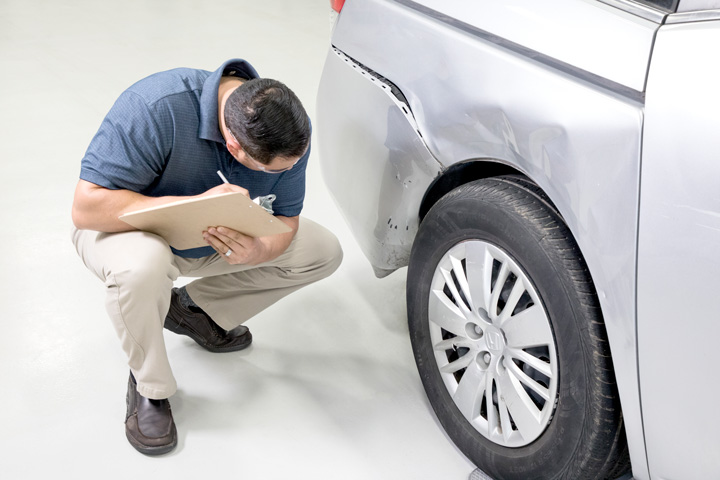
Was that scratch there? Did you take pictures? Did you have your customer sign off acknowledging the unrelated damage? We have all gone through this painstaking process of making an inspection sheet, taking pictures, and getting acknowledgment from the customer. Only to hear after the repair, "that scratch wasn’t there before." Which leads to the question, "Do automated vehicle inspections have a future in collision repair?"
Does my auto policy cover hail damage? Why do I need to have my front facing camera calibrated? These can be frequent questions a collision center may field from vehicle owners?
The question is often asked, "Can supplemental restraints system wiring be repaired?" The answer is: it depends on the vehicle maker. Let's take a look at Nissan and INFINITI position on this subject.
As part of the I-CAR Repairability Technical Support (RTS) initiative's OEM linking pin activity, we are helping to connect the collision repair industry to the vehicle makers. Recently we have had several technical inquiries asking about non-SRS wiring repairs on Nissan and INFINITI vehicles. We reached out to Nissan/INFINITI for clarification.
Vehicle makers may group their body repair manuals (BRM) in several different ways. Sometimes the BRMs are grouped by a year range, some are listed as VIN specific, and others are arranged by a body code. Let’s take a look at BMW/Mini to see how they group their BRMs.
Park assist sensors are part of the park assist system, just one of many advanced driver assistance systems (ADAS) found on vehicles today. Damaged sensors are typically replaced and may require painting to match the vehicle. Vehicle makers often provide information on the painting of new sensors. Some vehicle makers do not recommend refinishing sensors with minor finish damage because excessive paint thickness may adversely affect the operation of the park assist system. However, other vehicle makers allow refinishing and provide guidelines. Let’s see what Rolls-Royce has to say.
While searching for information on advanced driver assistance systems (ADAS) on an OEM repair information site, you may come across unique calibration procedures or events. These events can vary by year and model, even within a particular make. As the RTS team has been researching these systems, we have been identifying these atypical circumstances. In order to help you better understand them, we are putting together a series of articles that help with the repair and calibration of ADAS. Let’s take a look at Mazda blind spot sensors.

When researching procedures for disabling a high-voltage (HV) vehicle, you may notice that many of the procedures require the use of specific tools. Some of them are OEM-specific tools or scan tools. Often identifying and locating where to purchase these specific tools can be difficult.

Park assist sensors are part of the park assist system, just one of many advanced driver assistance systems (ADAS) found on vehicles today. Damaged sensors are typically replaced and may require painting to match the vehicle. Vehicle makers often provide information on the painting of new sensors. Some vehicle makers do not recommend refinishing sensors with minor finish damage because excessive paint thickness may adversely affect the operation of the park assist system. However, other vehicle makers allow refinishing and provide guidelines. Let’s see what Mercedes-Benz has to say.