Close
|
|


|
|

Ask I-CAR receives many technical inquiries referring to sectioning. The collision repair industry wants to know where can you section, does the OEM have a sectioning procedure, and where can I find the sectioning procedure? Most OEMs allow sectioning to outer body panels and the front and rear rails. Sectioning reinforcements is not as common, as most reinforcements are replaced at factory seams.

What is a one-time-use part, and how do you determine if a fastener, clip, or part can be reused? These are questions that we are confronted with in the collision industry quite a lot. The other big question is "Where do I find this information?"
The addition of the OEM Calibration Requirements Search to the RTS portal was a big step for the collision industry. While this new feature has been well received, there has been some confusion about what is included in the search tool. OEM Calibration Requirements Search is designed to provide information on the calibration requirements that are needed for vehicles equipped with advanced driver assistance systems (ADAS). This includes systems such as adaptive cruise control, lane keep assist, and collision braking.
It does not include Occupant Classification Systems (OCS), steering angle sensors, battery disconnects, or other calibrations/initializations required, when not related directly to ADAS. Let’s take a look at what additional items may require calibrations/initializations on Genesis vehicles.
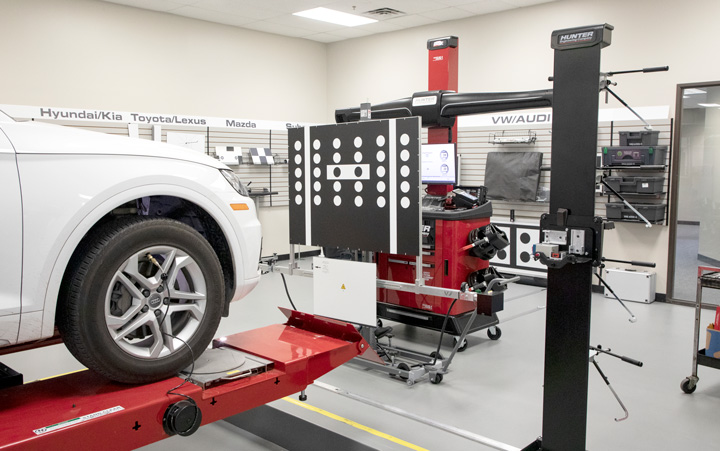
I-CAR has developed a hands-on course that will improve the knowledge base of learners regarding static calibrations on advanced driver assistance systems (ADAS). During the course, the learner will also gain experience with multiple vehicles and different systems.
I-CAR had a discussion with industry experts on replacing an F-150 outer box side.
When researching procedures for disabling a high-voltage (HV) vehicle, you may notice that many of the procedures require the use of specific tools. Some of them are OEM-specific tools or scan tools. Often identifying and locating where to purchase these specific tools can be difficult.
Weld-through primers are generally a zinc-based product that are applied to the mating surfaces prior to welding. Corroding zinc forms zinc oxide which protects the steel. This is called sacrificial corrosion. For a quality weld to be made it’s required that the weld-through primer be removed from the direct weld zone before welding the joint when GMA welding. Many OEMs have a position on when and how to use weld-through primer or when it shouldn’t be utilized. Let’s see what Rolls-Royce recommends and where this information can be found.
As electric-only, hybrid, and fuel cell electric vehicles are increasing in sales, they are becoming more commonplace in repair facilities. Along with the unique powertrains that come with these vehicles, also comes unique safety concerns. Regardless of vehicle maker, high-voltage (HV) systems pose a threat of injury or death if not handled properly. Only personnel with the proper training, PPE, tools, equipment, and service information should perform work on the HV systems.
Park assist sensors are part of the park assist system, just one of many advanced driver assistance systems (ADAS) found on vehicles today. Damaged sensors are typically replaced and may require painting to match the vehicle. Vehicle makers often provide information on the painting of new sensors. Some vehicle makers do not recommend refinishing sensors with minor finish damage because excessive paint thickness may adversely affect the operation of the parkassist system. However, other vehicle makers allow refinishing and provide guidelines. Let’s see what BMW/Mini has to say.
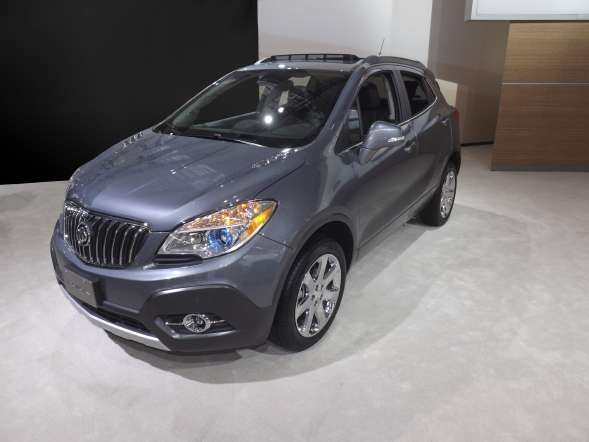
While searching for information on advanced driver assistance systems (ADAS) on an OEM repair information site, you may come across unique calibration procedures, events, or bulletins. These events can vary by year and model, even within a particular make. As the RTS team has been researching these systems, we have been identifying these atypical circumstances. In order to help you better understand them, we are putting together a series of articles that help with the repair and calibration of ADAS. Let’s take a closer look at General Motors 2017-2023 Buick Encore.
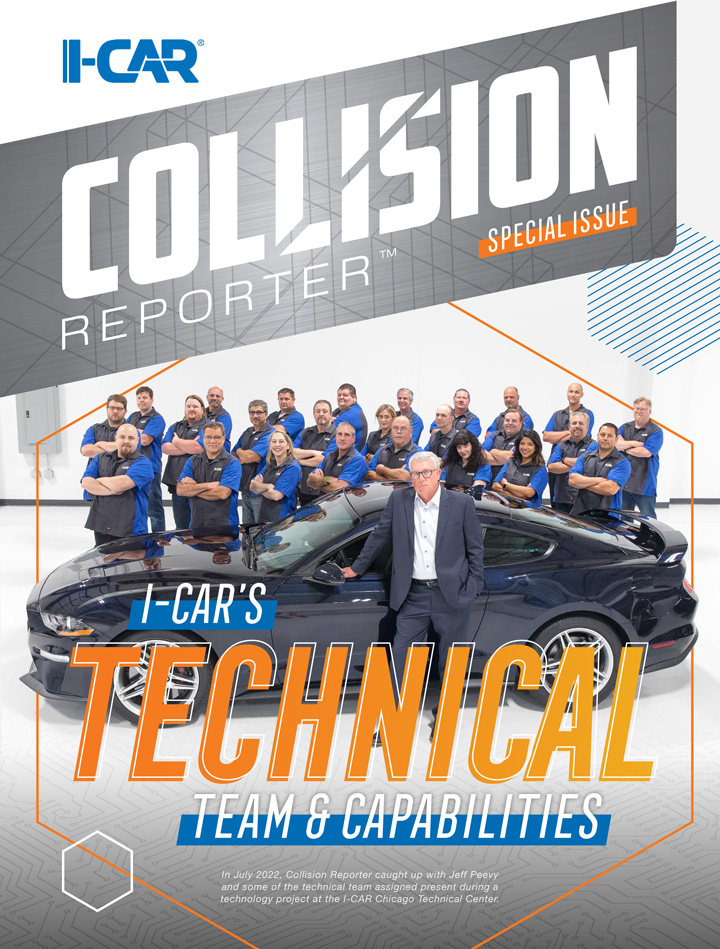
The twentieth installment of the I-CAR Collision Reporter - Special Issue has been released. This issue focuses on I-CAR's technical team and the team’s capabilities.
The question is often asked, "Can supplemental restraints system wiring be repaired?" The answer is: it depends on the vehicle maker. Let's take a look at Genesis on this subject.
As electric-only, hybrid, and fuel cell electric vehicles are increasing in sales, they are becoming more commonplace in repair facilities. Along with the unique powertrains that come with these vehicles, also comes unique safety concerns. Regardless of vehicle maker, high-voltage (HV) systems pose a threat of injury or death if not handled properly. Only personnel with the proper training, PPE, tools, equipment, and service information should perform work on the HV systems.
What is the MPa of the front lower rail? What is the outer uniside made of: steel, aluminum, or composite? Can heat be used to straighten or is it cold straightening only? What are the repair limitations? These are just some of the questions that the RTS team fields on a daily basis.
As we know, today’s vehicles can be constructed from a wide variety of materials. Knowing if the OEM provides information on body construction materials and repair guidelines is a crucial step in providing a complete, safe, and quality repair. Let’s see what Tesla has to say.
When researching procedures for disabling a high-voltage (HV) vehicle, you may notice that many of the procedures require the use of specific tools. Some of them are OEM-specific tools or scan tools. Often identifying and locating where to purchase these specific tools can be difficult.
The RTS team is researching how to find these tools to make it easier for technicians performing these tasks. As we research the location of these special tools, we are compiling the information in a series of OEM-specific articles.