Close
|
|


|
|
Ask I-CAR receives many technical inquiries referring to sectioning. The collision repair industry wants to know where can you section, does the OEM have a sectioning procedure, and where can I find the sectioning procedure? Most OEMs allow sectioning to outer body panels and the front and rear rails. Sectioning reinforcements is not as common, as most reinforcements are replaced at factory seams.
Parts are made from various materials including HSS, UHSS, aluminum, and carbon fiber. These parts also have complex designs to collapse or transfer collision forces in a specific manner. Introducing a sectioning joint to many of these parts will alter how the part reacts to those collision forces. For this reason, sectioning a part is only allowed if supported by vehicle maker repair information. Let’s see what Mazda says about structural sectioning.
Weld-through primers are generally a zinc-based product that are applied to the mating surfaces prior to welding. Corroding zinc forms zinc oxide which protects the steel. This is called sacrificial corrosion. For a quality weld to be made it’s required that the weld-through primer be removed from the direct weld zone before welding the joint when GMA welding. Many OEMs have a position on when and how to use weld-through primer or when it shouldn’t be utilized. Let’s see what Porsche recommends and where this information can be found.
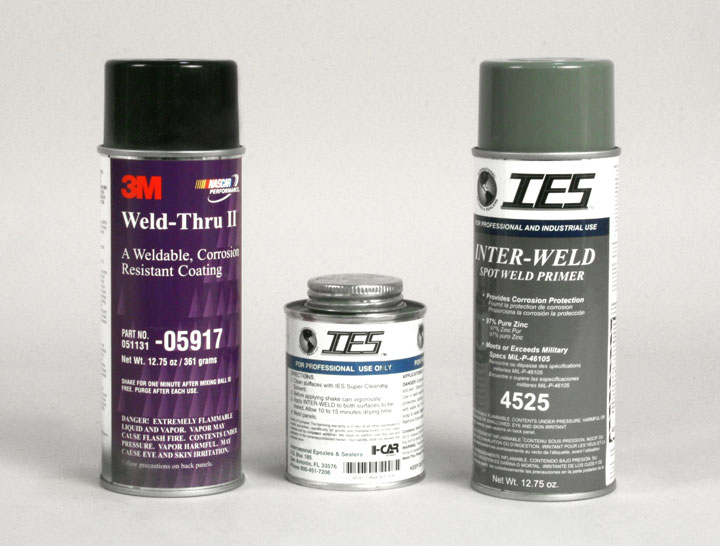
Weld-through primers are generally a zinc-based product that are applied to the mating surfaces prior to welding. Corroding zinc forms zinc oxide which protects the steel. This is called sacrificial corrosion. For a quality weld to be made it’s required that the weld-through primer be removed from the direct weld zone before welding the joint when GMA welding. Many OEMs have a position on when and how to use weld-through primer or when it shouldn’t be utilized. Let’s see what we have found for weld-through primer guidelines.
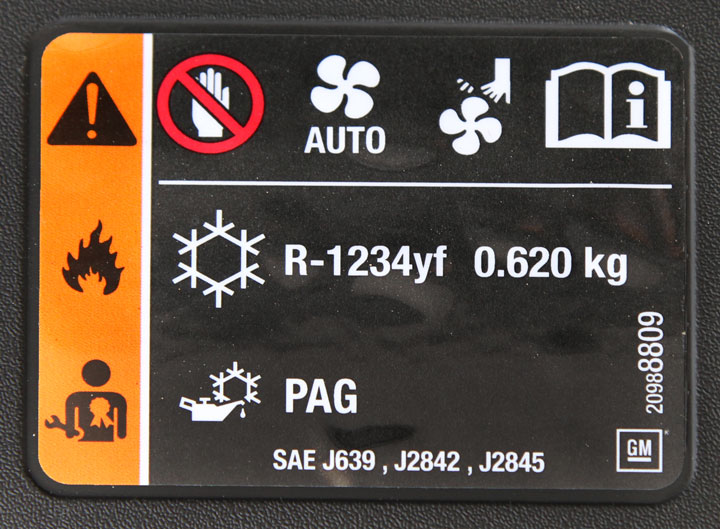
You may have noticed that A/C refrigerant on many new vehicles has started to change. For many years, OEMs used R134a. However, government mandates require OEMs to phase out R134a by the year 2021. This left OEMs scrambling to find a replacement. Many US OEMs chose to use R1234yf to replace R134a, but there are some OEMs that have chosen a different route. Let’s take look at these new refrigerants.

Ask I-CAR receives many technical inquiries referring to sectioning. The collision repair industry wants to know where can you section, does the OEM have a sectioning procedure, and where can I find the sectioning procedure? Most OEMs allow sectioning to outer body panels and the front and rear rails. Sectioning reinforcements is not as common, as most reinforcements are replaced at factory seams.
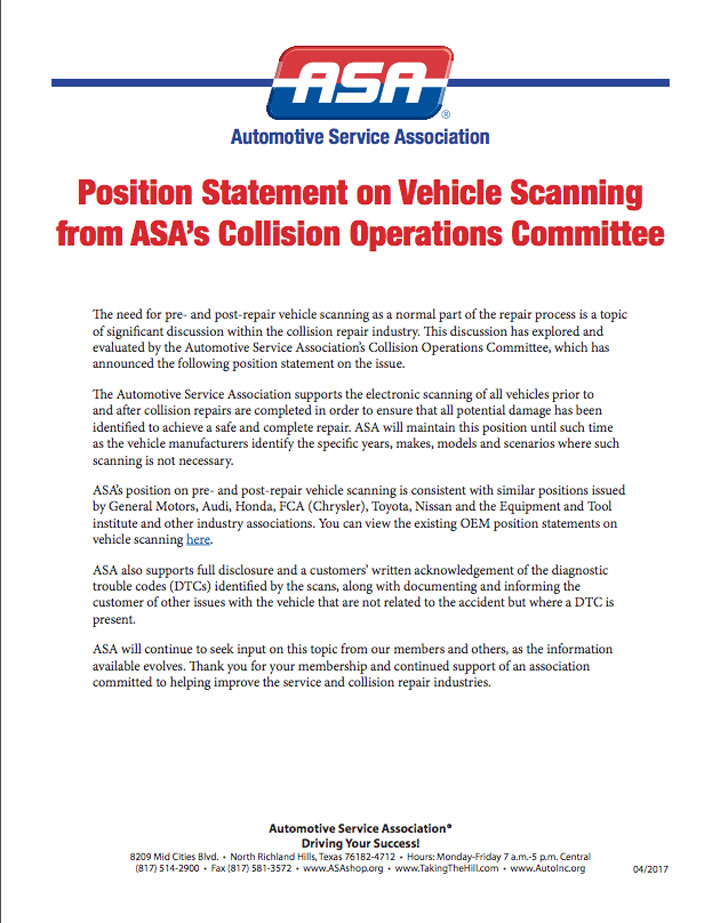
On April 17, 2017, the Automotive Service Association (ASA) released a position statement on pre- and post-repair system scanning. This statement coincides with many of the recently released statements issued by OEMs. Let’s see what this position statement says.
The addition of the OEM Calibration Requirements Search to the RTS portal was a big step for the collision industry. While this new feature has been well received, there has been some confusion about what is included in the search tool. OEM Calibration Requirements Search is designed to provide information on the calibration requirements that are needed for vehicles equipped with advanced driver assistance systems (ADAS). This includes systems such as adaptive cruise control, lane keep assist, and collision braking.
Ask I-CAR receives many technical inquiries referring to sectioning. The collision repair industry wants to know where can you section, does the OEM have a sectioning procedure, and where can I find the sectioning procedure? Most OEMs allow sectioning to outer body panels and the front and rear rails. Sectioning reinforcements is not as common, as most reinforcements are replaced at factory seams.
Ask I-CAR receives many technical inquiries referring to sectioning. The collision repair industry wants to know where can you section, does the OEM have a sectioning procedure, and where can I find the sectioning procedure? Most OEMs allow sectioning to outer body panels and the front and rear rails. Sectioning reinforcements is not as common, as most reinforcements are replaced at factory seams.

Collision Hub is a well-known source for collision repair news and information. On the Collision Hub website, you can find a monthly news report (Collision Hub Network News - CHNN), a blog, Repair University, and a relatively new feature Repair University Live. To view Repair University Live, you will need to purchase a subscription. However, the next episode, coming up on April 12, at 12:00 PM Eastern, will be sponsored by BASF, so it will be free to the public. Let’s take a look at how to view this episode and what it will include.
While the debate around pre-repair scanning and post-repair scanning rages on, there is a step that often gets overlooked in the repair process. This step is just as, if not more, important as pre-repair scanning and post-repair scanning. Post-repair calibration, or aiming, is essential for many of today’s advanced driver assistance systems (ADAS) to function properly.
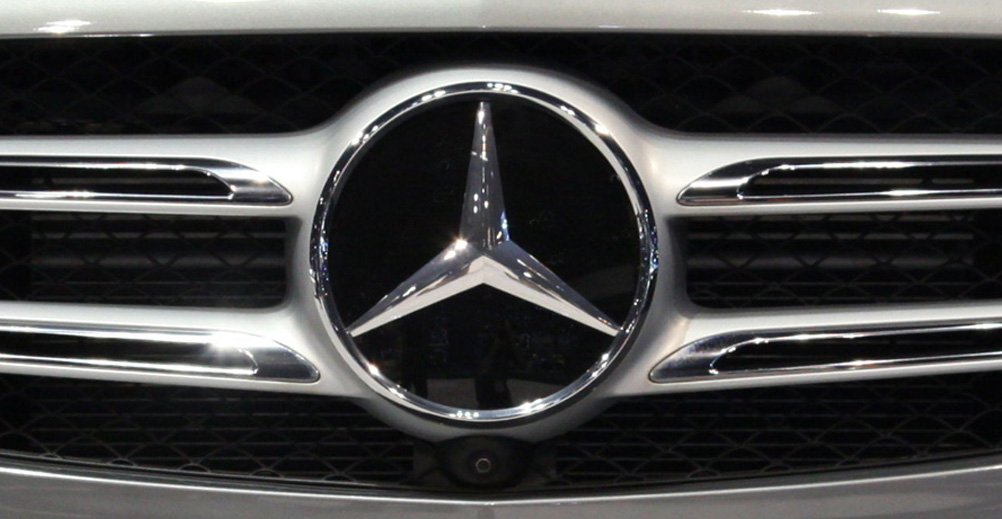
Weld-through primers are generally a zinc-based product that are applied to the mating surfaces prior to welding. Corroding zinc forms zinc oxide which protects the steel. This is called sacrificial corrosion. For a quality weld to be made it’s required that the weld-through primer be removed from the direct weld zone before welding the joint when GMA welding. Many OEMs have a position on when and how to use weld-through primer or when it shouldn’t be utilized. Let’s see what Mercedes-Benz recommends and where this information can be found.
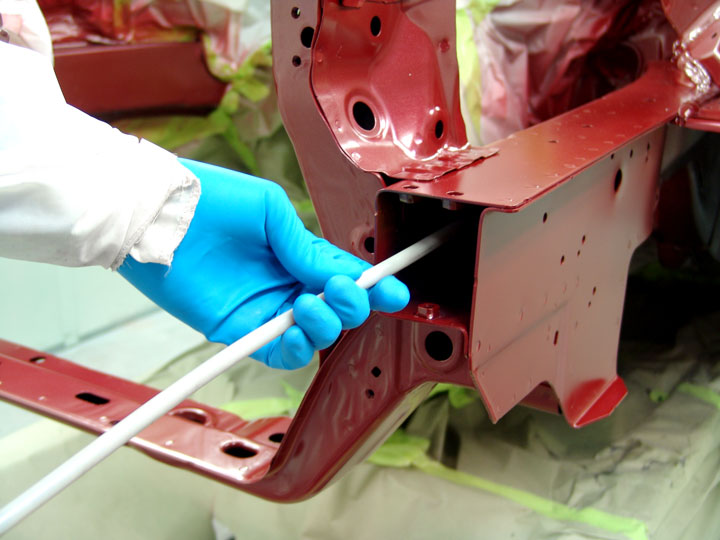
A key factor in collision repair, is making the repair last. When a vehicle is repaired, many areas get disturbed, which will then require corrosion protection to maintain a quality repair. However, there are certain precautions that need to be taken to safely and properly apply corrosion protection. Ask I-CAR received information on a vehicle that received corrosion protection before welding was completed. The fumes from the propellant ignited inside the rocker and exploded, causing major damage to the vehicle. Let’s look at how to prevent this from happening.
Ask I-CAR receives many technical inquiries referring to sectioning. The collision repair industry wants to know where can you section, does the OEM have a sectioning procedure, and where can I find the sectioning procedure? Most OEMs allow sectioning to outer body panels and the front and rear rails. Sectioning reinforcements is not as common, as most reinforcements are replaced at factory seams.
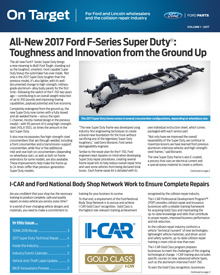
Ford has released the first installment of their On Target publication for 2017. Features of this issue include how Ford has made the 2017 Super Duty an all-aluminum body over a steel frame, following suit of the F-150. The article describes many of the specs and features of the new model. Ford also has shared an outline for removing the B-Pillar Outer Panel. Let’s take a look at this procedure.